Colour is everywhere underwater, but as a diver, you would be aware that without artificial light, the colours become muted as you descend. Using lights fill in the lost colour. Different diving situations require different dive lights. Dive lights vary in brightness, beam pattern, burn-time and size. Experienced divers have found that no single light is adequate for all situations.
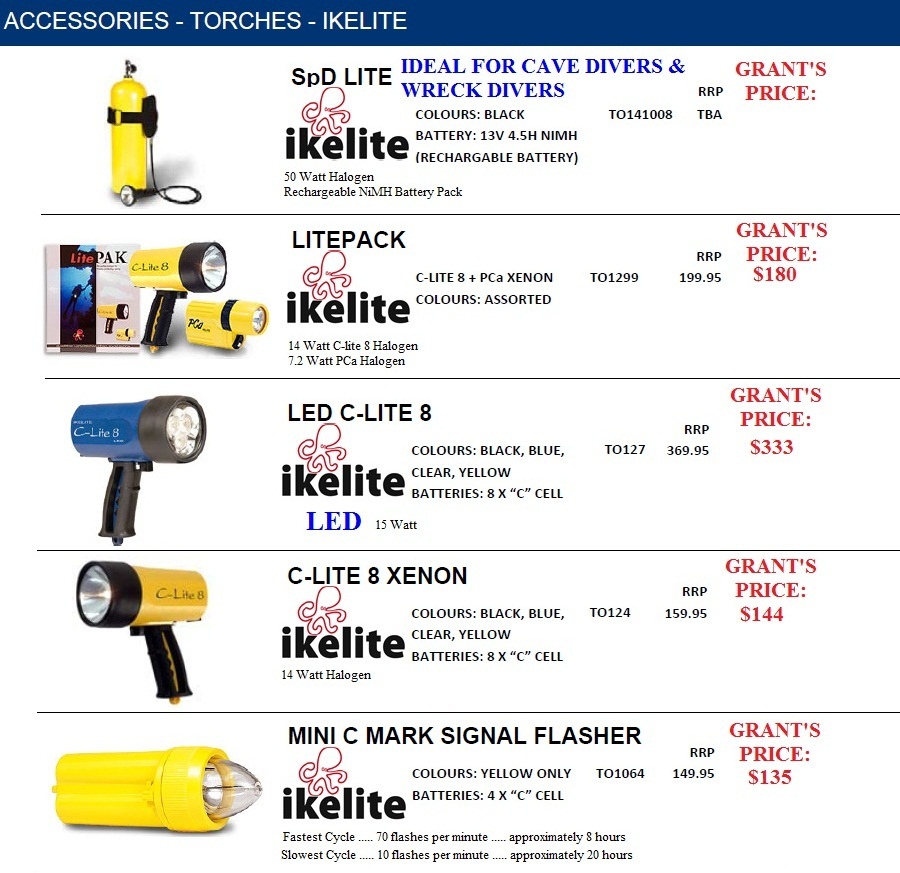
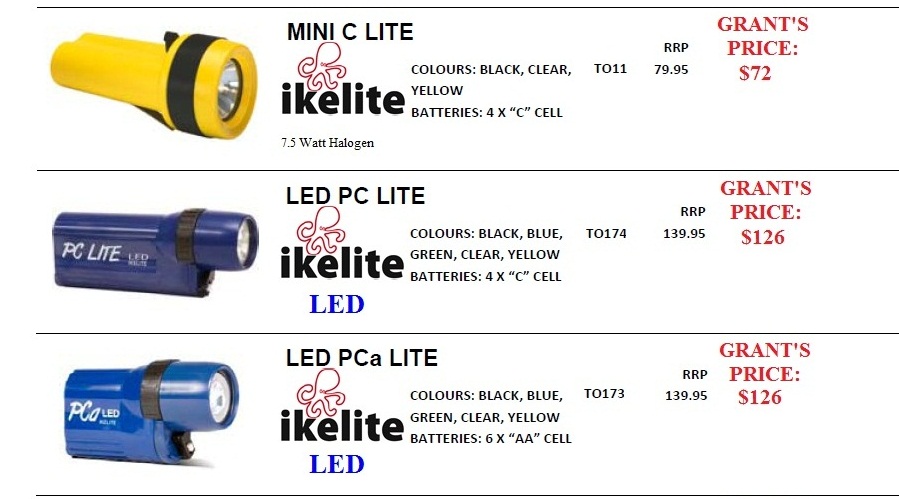
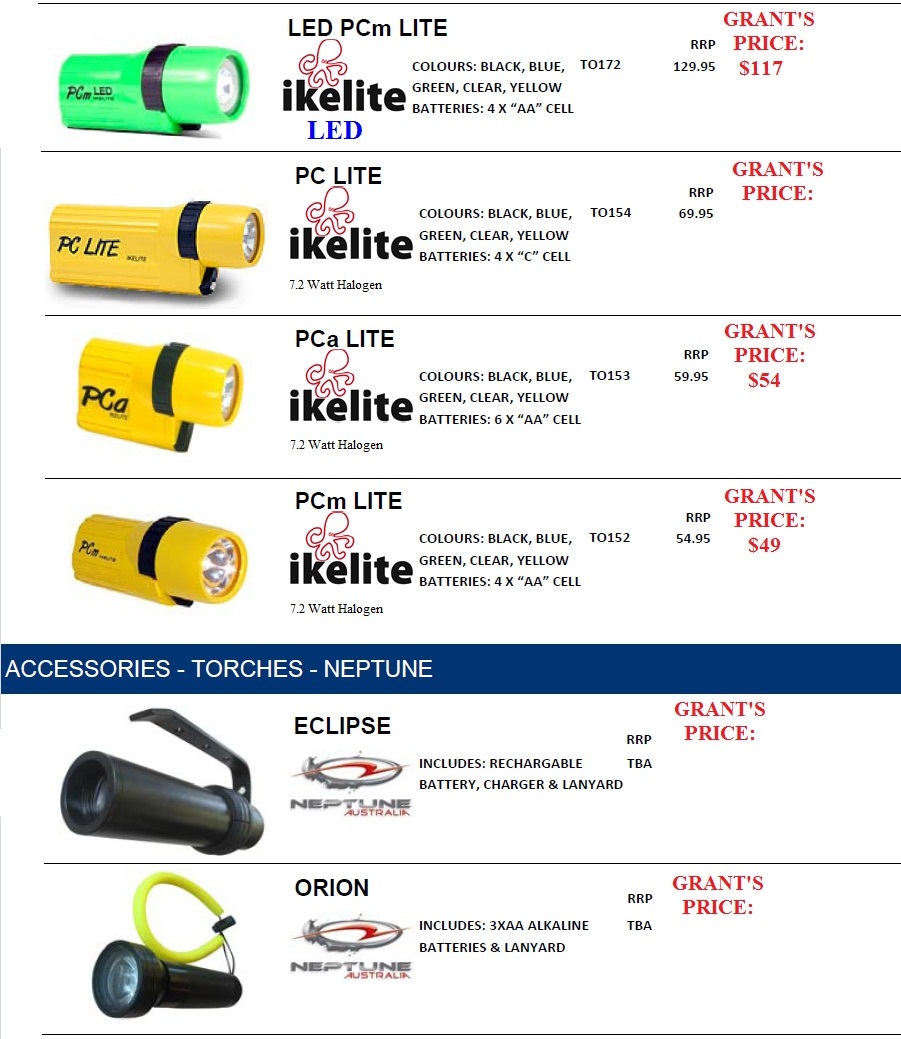
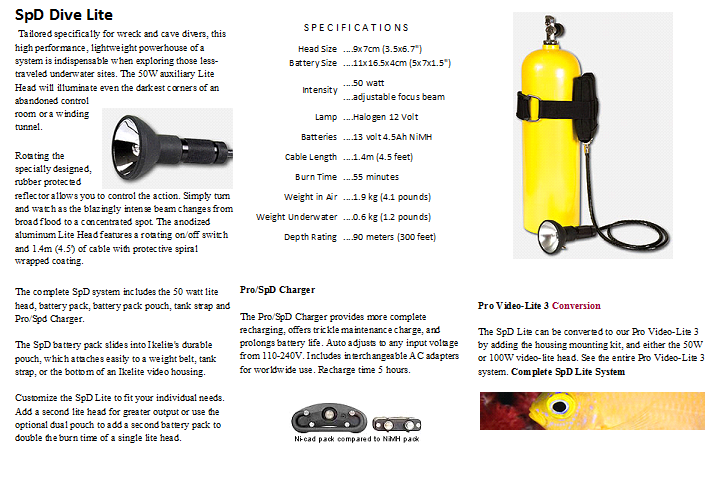
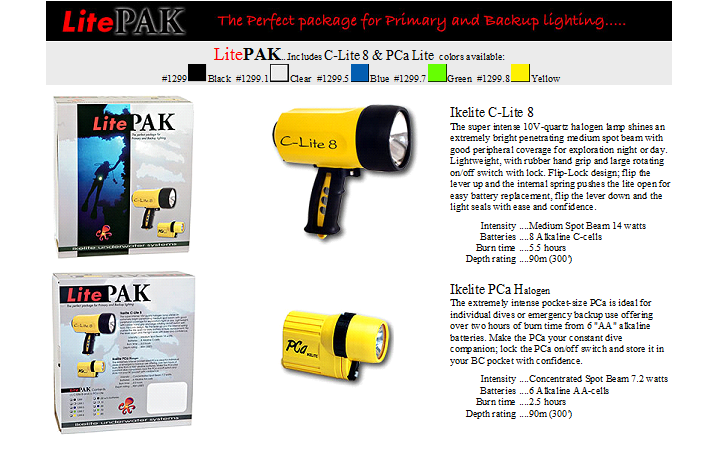
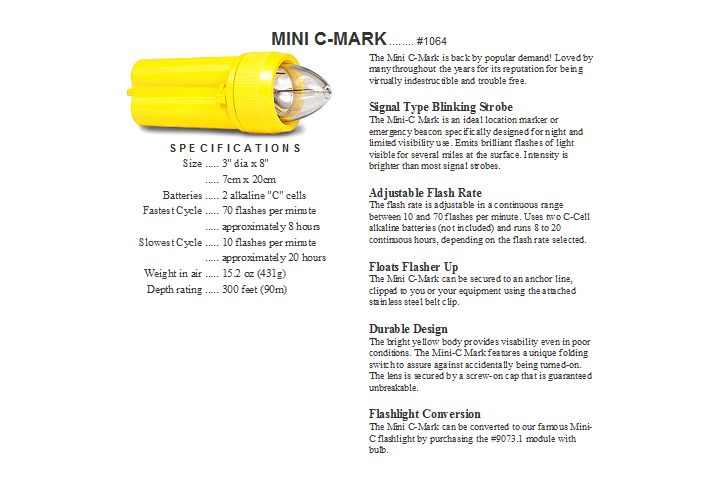
Scroll down for a selection of available dive torches and lights available from MUDGEE DIVE AND TRAVEL.
The bulbs used in dive lights are classified according to the material that generates the light. With diving lights, the whitest light will result in the truest colours underwater. Typically, these are:
Halogen
Xenon
LED, or
HID
NB: surface lights are usually Krypton or Argon bulbs.
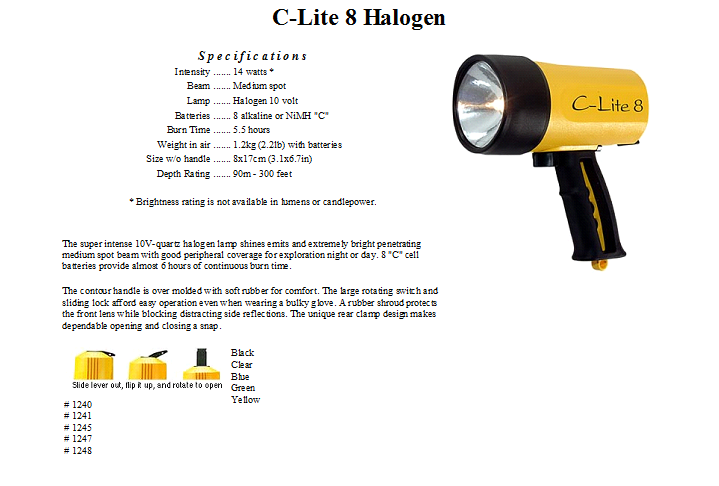
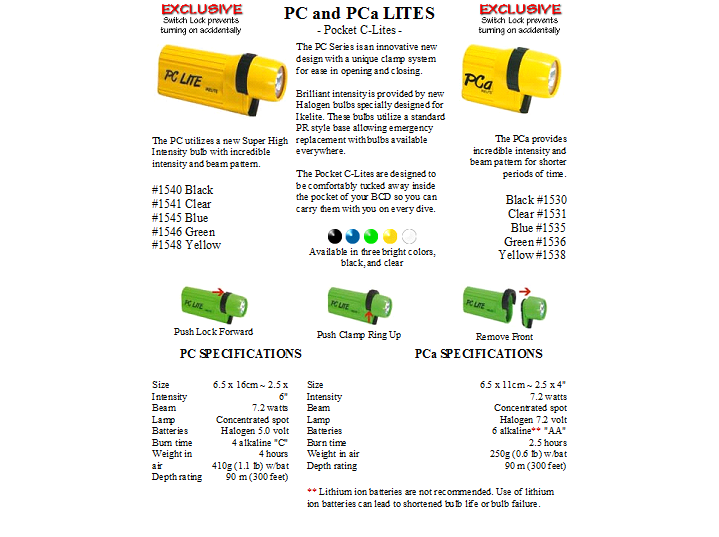
Halogen bulbs are the cheapest, but produce the least white light. Commonly, they have been the primary choice for dive and video lights. They are largely being replaced with HID lights
Xenon bulbs are brighter than both krypton and argon bulbs. They are a good balance between brightness, cost and burn time. Many popular dive lights use Xenon bulbs.
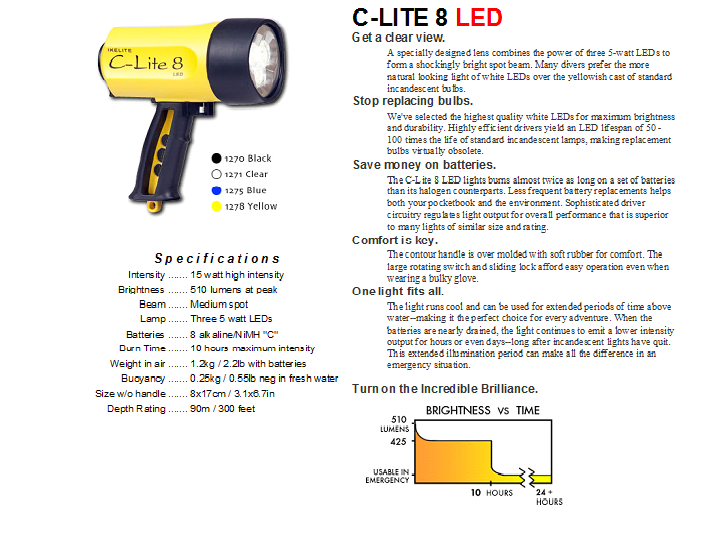
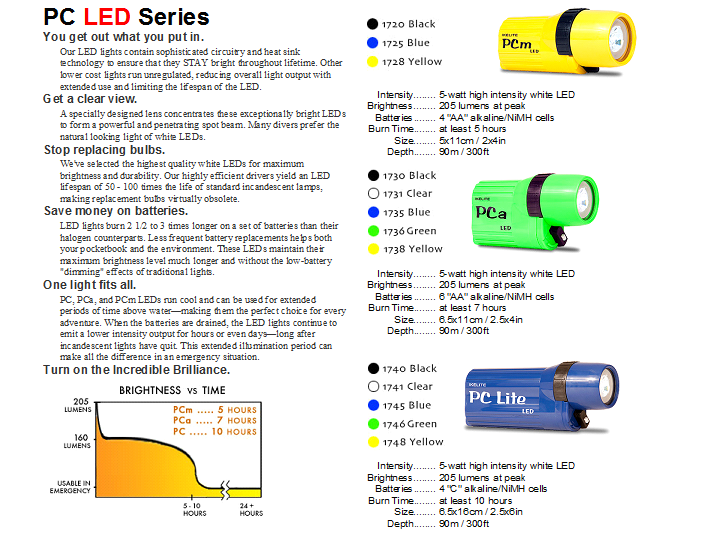
LED's offer comparable brightness to Xenon bulbs, but use far LESS power and therefore give substantially LONGER burn times for any same given battery supply. They are also the HARDIEST bulbs with the LONGEST expected bulb life. These types are rapidly becoming the most popular dive lights, however are more expensive than Xenon bulbs. They are however, cheaper than HID.
HID's are the BRIGHTEST and provide a lot a light for the power they consume. The drawback is that HID lights CANNOT be repeatedly turned on/off, without excessive battery brain and wear on the bulb. Generally, you turn them on just before entering then leave it on until you exit the water again. Also once turned on, you must wait several minutes before turning off. HID's also generate a LOT of heat.
REFLECTORS
Reflector shape also greatly affects a light's characteristics. They either concentrate or spread the beam. A concentrated beam is brighter, however a beam with greater spread has better coverage has less brightness - so a balance needs to be made depending on what you are doing with the light.
Choosing A Dive Light (NOTE: Sourced from PADI Night Dive Manual).
Disclaimer:Data and information is provided for informational purposes only, and is not intended for any other commercial or non-commercial purposes. Neither us nor any of our data or content providers shall be liable for any errors or delays in the content, or for any actions taken in reliance thereon. By accessing our web site, a user agrees not to redistribute the information found therein. We provide customized links to select companies for your convenience only. We do not endorse or recommend the services of any company. The company you select is solely responsible for its services to you, the user. We shall not be liable for any damages or costs of any type arising out of or in any way connected with your use of our services.